Hybrid mobile app development framework is a framework that develops native mobile apps using web technologies. The fact that these are frameworks means that they can be used to create cross-platform applications.
React Native is a well-known example of that, which enables you to implement the app using JavaScript and makes it work on both Android and iOS devices.
With the advancement of technology, several frameworks and tools have already been developed to facilitate the process for developers and provide them with different user experiences.
Following are three types/ subcategorizes of app development- web, native, hybrid mobile app development. Its hybrid mobile app framework got the best part of the range, and as one of the top frameworks to create a cross-platform application, it has created its specialty escort thee industry.
UI/UX design: Hybrid Mobile App Development
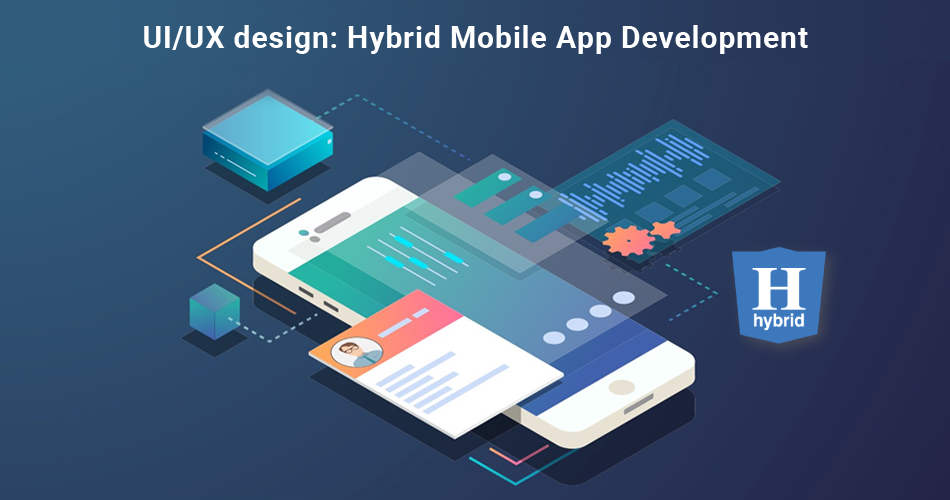
UI/UX definitions are broad and, hey, who knows the difference? It’s tough to find professionals that specialize in both areas. Whereas UX design is how a person interacts with your product, UI design deals with the specific features of the product and the layout of its interface.
But few professionals are familiar with both. Thats either a lot of time, or money, to find out who knows what they are doing in UI/UX, or you never get the right solution.
UI/UX design plays an important role in user interference, user experience, graphic designs, logo designs, mobile app design as well as website design.
1. User experience
The quality of a user’s experience depends on what the user thinks and feels about a product or service. A good experience will see a person return again and again for more content, spend more time on the site and up the rating.
As such, we can classify UI/UX designs to serve very crucial purposes in interactions between users and web apps via the internet and in real-time. That matters, because it ultimately affects customers’ purchasing decisions and brand affinity.
2. Graphic design
Design is a set of principles that graphic designers are trained on. They need to have a strong sense of color, form, line, texture and space. They also need to understand how to make the design work for the message they are conveying.
Graphic design is becoming increasingly relevant in our culture, as it is a powerful visual language that speaks a common vocabulary. Graphic designers are employed by advertising agencies, mobile apps, and websites to help their clients build engaging advertisement campaigns rapidly and simply while also optimizing their efficacy with an audience; the ultimate goal being to persuade the viewer to purchase an advertised product or service.
3. Website design
Website design is the end result of the creative process. UI/UX designers to know many UI/UX design software, to be familiar with how colors and fonts suit. Most designers treat this as a passion, love the challenge of bringing different designs to life and keeping abreast of current industry trends.
The factors producing that: web design, usability, content management systems (CMS), web hosting platforms, and so on. As one of them there are several valuable UI/UX design tools for enhancing website designing services and the best of them can also accommodate hybrid Tuesday UI/UX.
4. Mobile app designs
So companies are marketing through mobile apps instead. They act like the company at the same time and provide access for all the company services at one place. Mobile apps help create a customer retention strategy too.
Some mobile app design tips to consider
– Use responsive web design for your website so that your customers can view your website on any device they want. This is especially important if you want customers to be able to access your site when they’re on the go or in an area that has limited internet access.
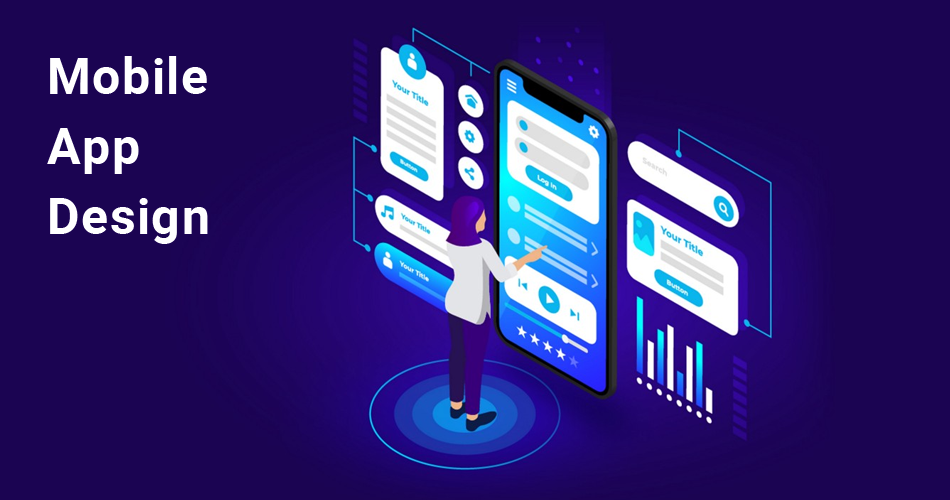
– A good rule of thumb for content is that it should be at least 20 percent text and 80 percent images/videos
– How people interact with mobile apps is just as important as how it looks. Make sure the navigation in the mobile app is excellently designed for an excellent user experience.
5. Logo designs
Logos are the first thing that people see to identify your business. It is important to invest in a good logo design because it can show how serious you are about your company. There are many different ways to go about designing a logo, but before any decision is made, it is important to understand how logos work and what makes them effective.
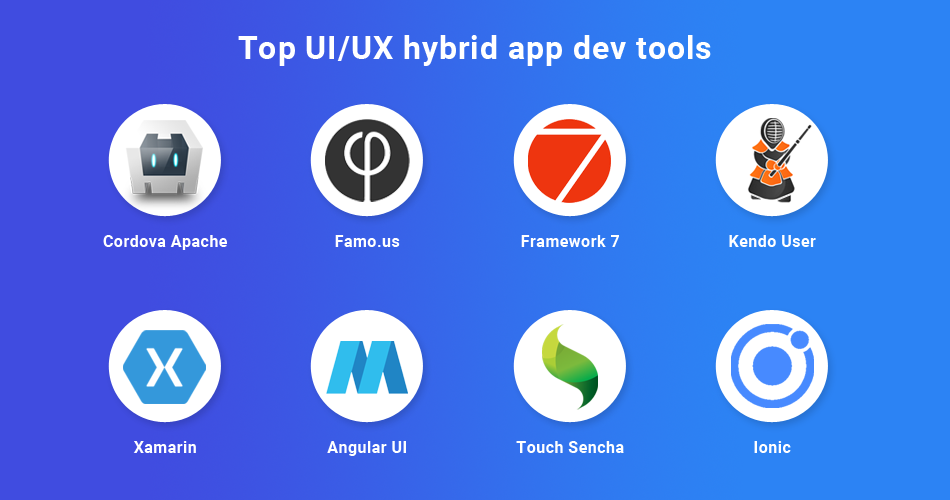
Let us look at the top UX/UI hybrid app dev tools -:
1. Cordova Apache
Apache Cordova is a hybrid mobile development platform that is free source. It enables the development of cross-platform projects using common web technologies such as HTML5, CSS3, and JavaScript rather than the native language of each mobile operating system. It accesses hardware via API and enables the usage of all available features.
Because this framework is part of the Apache Software Foundation, it will remain free to use under any circumstances. This is an excellent option for you especially if:
-You’re a mobile developer who wants to make your app available on numerous platforms without having to rewrite it from scratch for each one.
-You are a web developer looking for a way to market your app in app stores.
-You are a mobile developer who wants to use the device API to combine proprietary components with WebView (custom browser windows).
Apache Cordova can be used for both cross-platform workflow and platform-specific development. This means you can make the project available on a wide range of devices or concentrate on improving performance for a specific section, which may necessitate adjustments to low-level operations. The functional range of this solution can be expanded by community-created plugins. Comprehensive documentation and guidelines cover every topic you’ll need to get started with development.
Overall, it is a professional toolkit that includes everything needed to build a strong application with a wide range of functionalities.
2. Famo.us
If you want to create a smooth application, Famo.us is the best option. Famous.us, as an open-source JavaScript framework, aids in the construction of complicated yet engaging apps, making it one of the top choices for developers. For the same reason, this is one of the greatest solutions for developers looking to create a hybrid mobile application. The nicest part about using this framework is that it can be used to create desktop web applications. Famo.us framework is one of the most recent hybrid apps on the market. It functions as a framework, allowing for speedier app development.
3. Framework 7
It is far more popular than other frameworks in the same category, such as Ionic and Onsen UI. Framework 7 is currently widely recognized as one of the best frameworks for developing iOS hybrid apps, with a plethora of useful features. Developers enjoy working with this framework since it allows them to incorporate the efficacy of HTML, CSS, and JavaScript while creating feature-rich apps.
The icing on the cake is that Framework 7 is similar to native iOS apps in terms of functionality like swipe back, native scrolling, high-performance animation, and so on. The best part of working with Framework 7 is that it includes a variety of ready-to-use UI elements like side panels, modals, and others.
4. Kendo User Interface
It focuses on creating modern HTML UI. Kendo UI incorporates the most recent JavaScript, HTML5, and CSS standards and provides a variety of tools for developing apps to meet specific needs. Along with Bootstrap, it supports jQuery and AngularJS. Kendo UI is a unique framework because it offers both an open-source edition and enterprise features in its commercial package. The Kendo UI is lightweight, allowing developers to focus on application development without sacrificing quality. The nicest part is that it comes with a built-in theme builder.
5. Xamarin
Xamarin is a Microsoft-owned framework for cross-platform application development in C# for iOS, Android, and Windows Phone. The concept is straightforward. You create the code in the above-mentioned language, utilizing all of its characteristics, including the SDK platform and native UI development. In terms of appearance and performance, the finished program, according to the creators, is no different from native projects.
The following items are included in the package:
IOS – a C# library that enables access to the iOS SDK; Android – a tool that enables the usage of the Android SDK; Compilers; Xamarin IDE; and VS Plugin.
Angular UI for Mobile
Sencha Touch is extremely similar to Mobile Angular UI. It can be used as a Bootstrap 3 extension, although it is not dependent on Bootstrap or jQuery. Because Mobile Angular UI does not rely on jQuery, all that is required to build an amazing mobile user experience is AngularJS directives. Mobile Angular UI is an HTML framework that also employs Bootstrap3 and AngularJS to create interactive, engaging, and remarkable applications for users.
There are additional benefits for users because Mobile Angular UI has been made available for free and can be used under the MIT license. The source code is easily accessible on Github.
Touch Sencha
Because of the increased development costs, Sencha Touch is the ideal solution for enterprises developing hybrid apps. Because of its low cost, Ionic is an excellent choice for independent developers and freelancers. Touch Sencha includes Ext.JS, which aids in the development of high-performance apps. It is also popular among developers since it allows them to create applications that have a native feel and look. Sencha is an outstanding framework; yet, in order to fully utilize its capability, a developer must devote a considerable amount of effort.
Ionic
Ionic is more well-known than its competitors because it is available for free, whereas Ionic’s competitors are only available in paid versions. The framework is extremely scalable and was built using clean and simple markups. Ionic also includes an optimized mobile library of HTML, CSS, and JavaScript components, which adds to the framework’s robustness.
The framework’s frequent upgrades keep it up to date for developers to use. Ionic is an open-source framework that includes HTML5. Furthermore, it includes the Front-desk SDK, which enables developers to create beautiful designs and improve the app’s quality.
Conclusively
There are now a variety of hybrid mobile app development solutions available, making this lucrative field even more competitive. It is no longer a luxury available exclusively to the industry’s top companies; it has become a need if you want to advertise your brand or provide certain services to the public. Given that there are numerous good open source solutions available for anyone to utilize freely at their discretion, the competition is fierce.